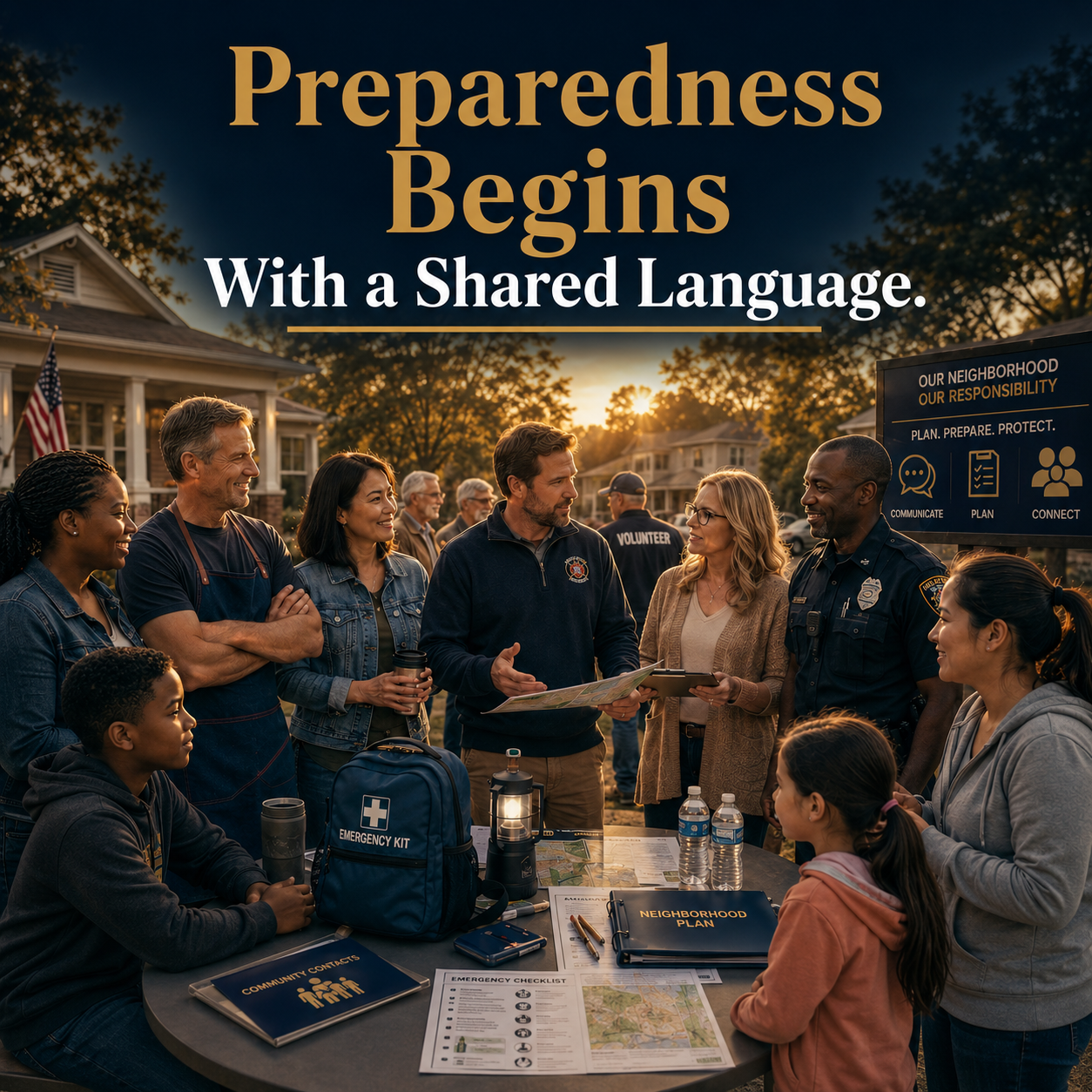
A Shared Social Language for Preparedness
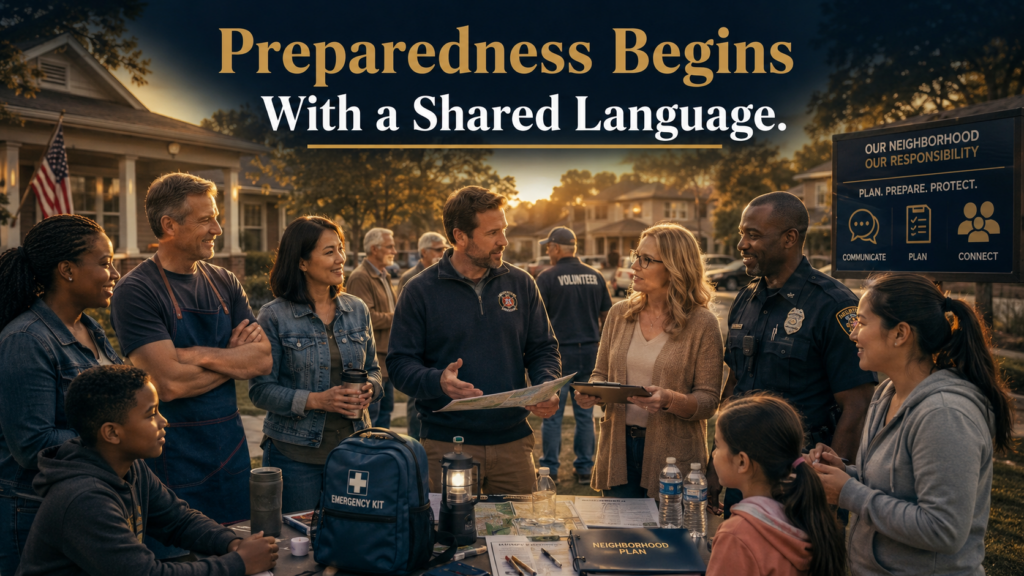
What We Can Learn from How Other Countries Normalize Preparedness
Occasionally you encounter something that will change how you look at something familiar to you.
A YouTube video about Preppers and Preparedness made me stop and think. As with most things, every once in a while something comes along that makes you look at something familiar with fresh eyes from a different perspective. Recently I viewed a video from a Prepper Potpourri YouTube episode – What Other Countries Get Right About Preparedness (What We Don’t). That YouTube video really challenged my perspective about the subject of Preppers and Preparedness and in a large way it caused me to ask the question.
Has America Lost It’s Language For Preparedness
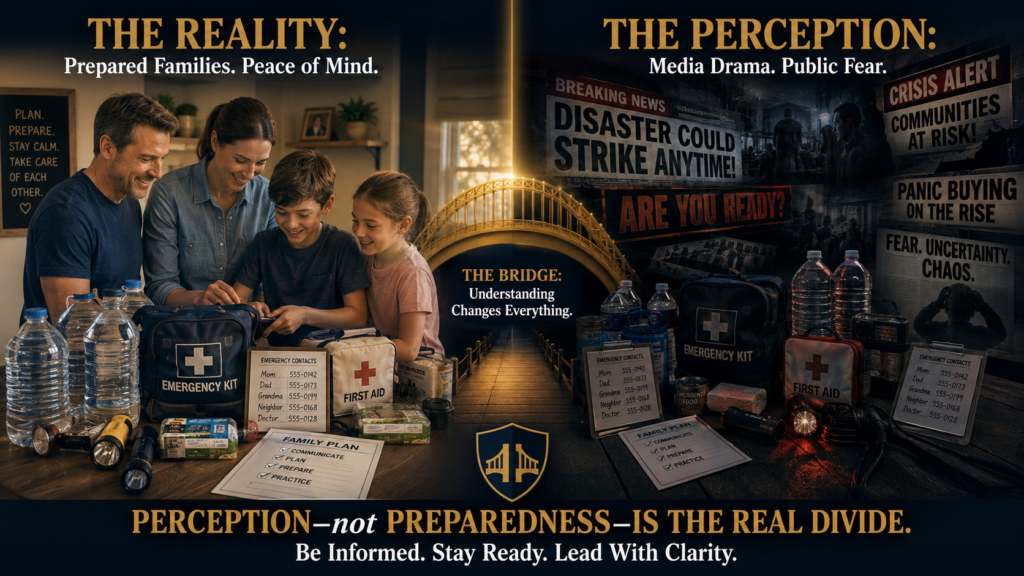
I started my research into this topic with the understanding that America is not as prepared for a variety of disasters and emergencies as countries in Europe and Asia are. What I found, though, was that there are millions of Americans preparing their homes, businesses, schools, and communities for emergencies and disasters.
The difference, though, is that in countries across Europe and Asia, preparedness for a wide variety of potential emergencies and disasters is considered a normal responsibility of every citizen.
In America, preparedness for emergencies and disasters is viewed through several different lenses. For many people, maintaining emergency food, water, and essential supplies is simply part of being a responsible parent, homeowner, or business leader. Others, however, associate those same actions with a niche hobby or even attach a political identity to the label “prepper.”
The supplies are identical.
The intent is identical.
Yet the public perception can be completely different.
That contrast reveals something much deeper than whether Americans prepare for emergencies.
It reveals that we lack a shared social language for preparedness.
In many countries throughout Europe and Asia, preparedness is woven into the national culture and viewed as a normal responsibility of every citizen. In the United States, preparedness is often seen through one of three lenses: a personal hobby, a response to natural disasters such as hurricanes or wildfires, or a political stereotype attached to the word “prepper.”
As a result, two people preparing for the very same emergency could be viewed in completely different ways. One is seen as a responsible citizen. The other is labeled a fanatical extremist.
That distinction matters because language shapes culture, and culture influences behavior.
Being prepared for whatever the future may hold is not about being fearful of the future. Rather it is about being a leader in today’s world by being ready for anything.
When Preparedness Becomes Part of National Culture
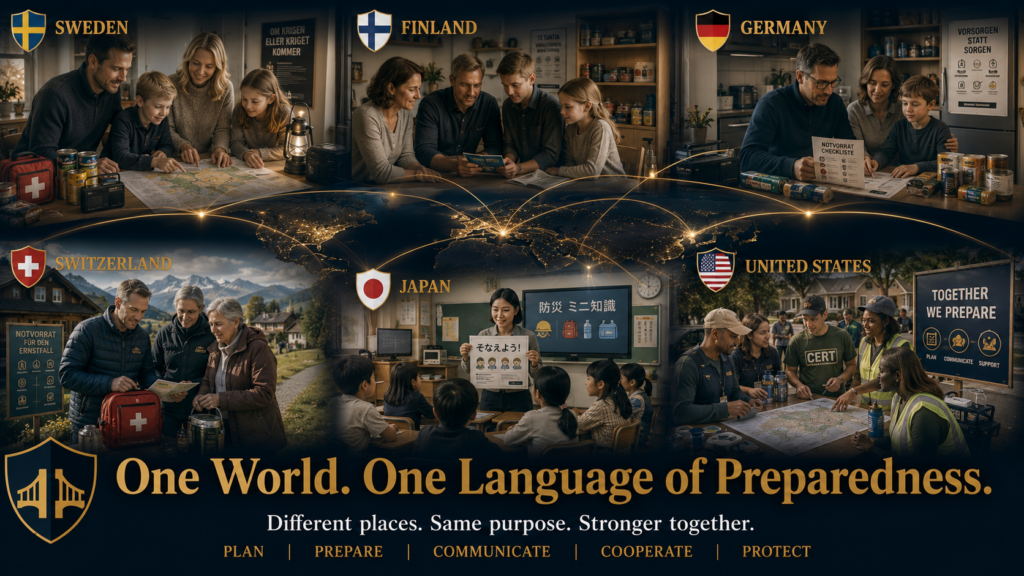
There are Countries throughout Europe and Asia where governments have come to realize that they cannot respond in time to or deal with the aftermath of every single emergency. As a result, many countries have fostered a preparedness culture that expects and even relies on the active participation of its citizens to deal with the first hours or days of a crisis.
Interestingly, this expectation isn’t presented as fear.
Instead, it is presented as responsibility.
That difference changes everything.
Consider several examples.
Sweden’s Preparedness Culture Begins With Personal Responsibility
Information on preparedness is distributed on a regular basis to all households in Sweden. Sweden’s view on preparedness is that all citizens are part of the country’s overall emergency preparedness system and that it is every citizen’s responsibility to be prepared for possible emergencies and to be able to help themselves and help others until help arrives.
Instead of informing households about disaster preparedness and explaining why it is important for them to be prepared for disasters, the Swedish authorities providing the preparedness guidance to households assume that the household already is aware of the reasons for being prepared for disasters and therefore the guidance provided by them focuses on what to do.
Stock up on provisions for at least a week. Prioritize government and other services for the most vulnerable in society.
Notice the message.
Government is important.
Citizens are equally important.
Neither replaces the other.
Together they create resilience.
This is an example of a shared social language for disaster preparedness.
Finland Makes Preparedness an Everyday Conversation
Finland’s nationally recognized 72 Hours campaign enables Finnish households to become self-sufficient for 72 hours in case of a major emergency or natural disaster.
The campaign materials are distributed by schools, companies, clubs and volunteers, municipalities and other organizations and partners within the community.
Preparedness isn’t hidden inside emergency management offices.
It becomes part of everyday conversation.
Children learn it.
Employers reinforce it.
Communities practice it.
Eventually, preparedness simply becomes normal.
I want to emphasize that what they are doing is not survivalism, it is responsible citizenship.
That isn’t survivalism.
That’s responsible citizenship.
Germany Reinforces Household Preparedness
Households should be able to cope on their own for up to 10 days in case of a major crisis.
Once again, the message is remarkably practical.
No, the officials are not suggesting that people retreat from society to prepare for an emergency.
Instead, they recognize a simple reality.
Large-scale emergencies stretch available resources.
Households that can sustain themselves for a short time help a community at large by taking pressure off of all of the above groups of people for the available resources that they need to do their jobs during a major emergency. In a major fire, for example, there are only so many fire fighters, police officers, emergency medical service providers, and public works employees available to respond in an emergency. If all of the households had enough food and water for themselves and their families for 72 hours (for example) then all of the above groups of people would be able to help those people affected by the fire (for example) instead of having to respond to individual households for food and water.
That is preparedness serving the entire community.
America’s Challenge Isn’t Information
It could be argued that the challenge for preparedness in the United States is that households are not encouraged to prepare.
Actually, that isn’t true.
There are many resources provided by the federal government to assist a household in becoming prepared, such as Ready.gov.
Ready.gov has lots of very good information on how to make your household and your community better prepared for unexpected disasters as well as ways to have as smooth a return as possible after the disaster.
Likewise, FEMA’s National Household Survey shows a steady increase of the percentage of the population that is taking several key steps toward greater preparedness. According to FEMA’s National Household Survey, 51% of Americans believe they are prepared for a disaster. However, when measuring actionable behaviors, only 57% took three or more protective actions (like assembling supplies or making a plan) within the past year.
This is a rather low bar, only 25% of the possible preparedness actions available, doesn’t equal preparedness.
So where does disconnect occur?
It isn’t a lack of information.
It is a lack of cultural framing.
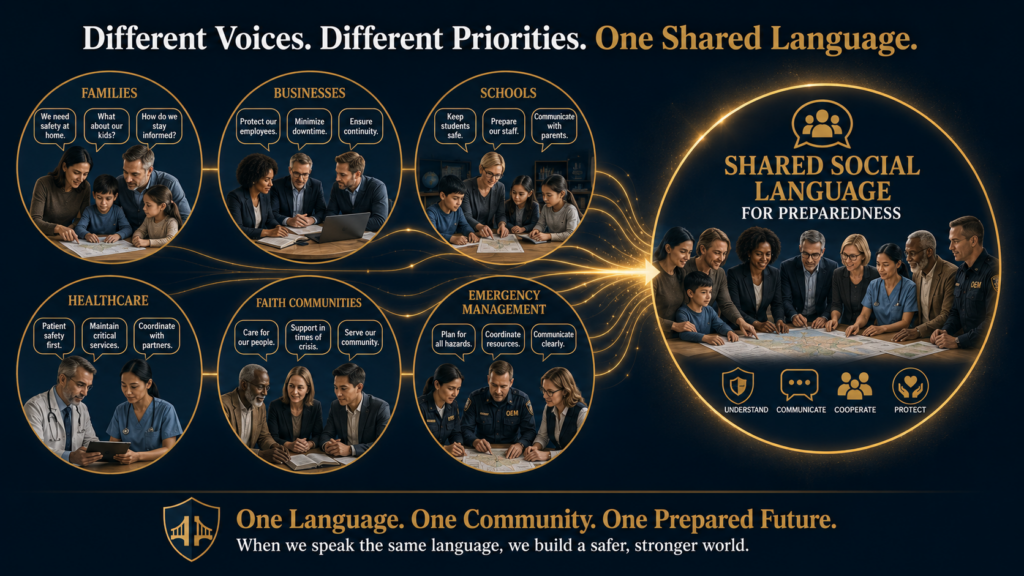
Preparedness often exists inside separate conversations.
Emergency managers talk about preparedness.
Military veterans discuss readiness.
Businesses focus on continuity.
Parents think about protecting their children.
Schools emphasize safety.
Faith-based organizations organize volunteers.
Healthcare organizations develop emergency operations.
Each group speaks its own language.
Most of these separate conversations of preparedness exist in isolation from one another and thus do not link up with each other in a shared social language for preparedness.
In short, preparedness is a country’s greatest vulnerability because of culture. This affects how people behave before an incident and makes it possible to change to a proactive attitude as soon as an incident occurs.
The varied languages of preparedness activities currently going on could in fact be one of America’s greatest vulnerabilities to disasters—because so much of human behavior is culturally influenced prior to a disaster occurring.
Building a Shared Social Language for Preparedness
Changing a culture to be better prepared is not going to happen because of a government published brochure.
Similarly, buying an emergency supply of food and water does not mean that a change in culture has occurred.
The process of people speaking a common language and having the same expectations changes a culture.
Until such time as preparedness becomes part and parcel of the normal responsible leadership in this country, that change can begin with five simple steps.
That shift begins with five simple changes.
Speak About Preparedness Before an Emergency
Most conversations about preparedness begin after tragedy strikes.
They are typically conducted while people are struggling to deal with the aftermath of the emergency with not enough information to make fully informed and thoughtful decisions regarding the long lasting consequences of their actions.
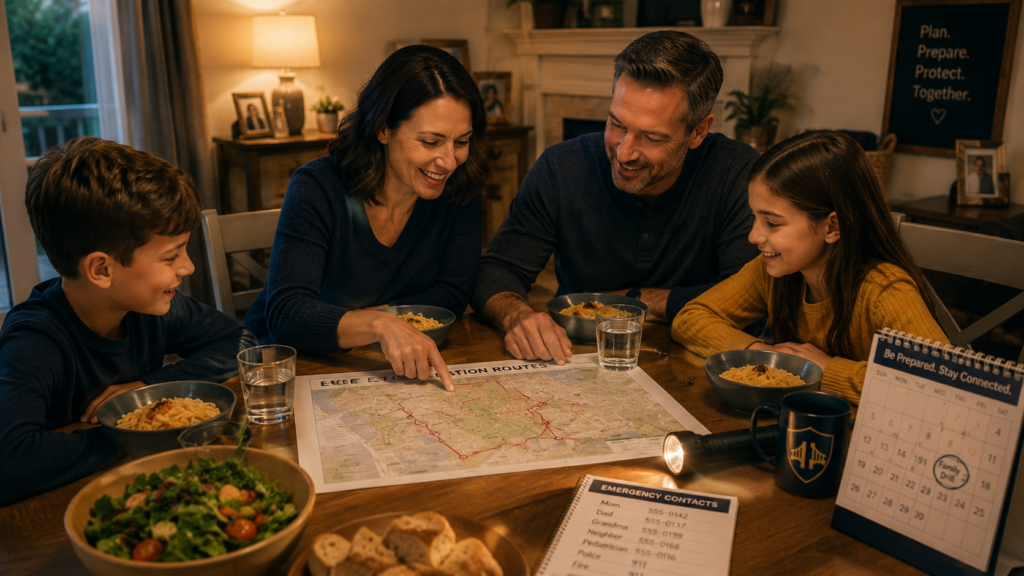
However, by making preparedness an ordinary conversation that is commonly brought up in common conversations (dinner tables, Boardrooms, PTA meetings, Organizations within communities etc.) then people will begin to see it in a new light.
We normally discuss topics of this sort because they have long term value to us.
Preparedness deserves that same level of acceptance.
When a community discusses preparedness regularly, it ceases to be foreign or intimidating and becomes familiar and accessible.
Shift From Fear to Leadership
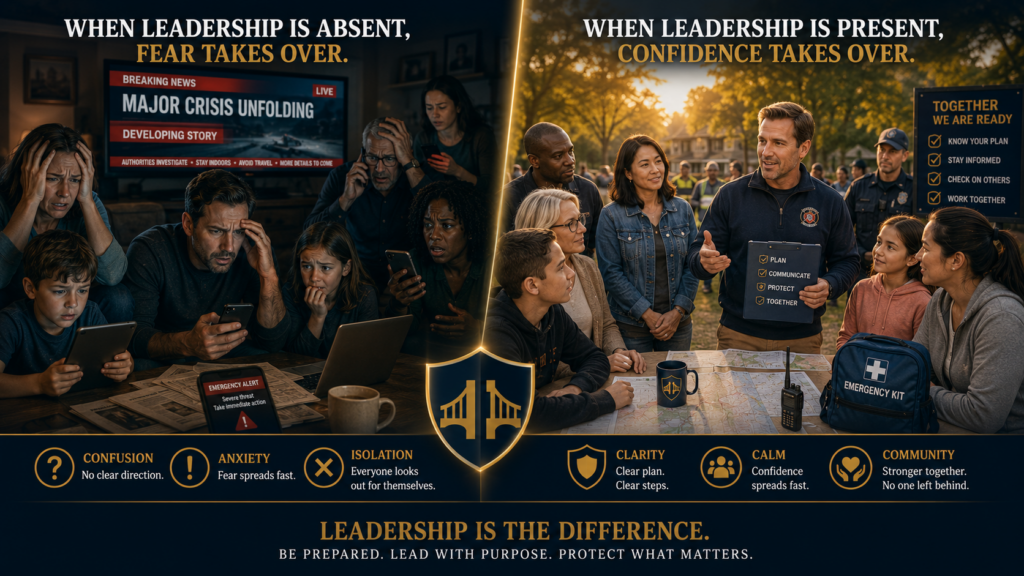
Most preparedness messages are given with fear.
Short-term fear will prompt someone to respond in the immediate aftermath of a disaster, but inspire no long-term changes in behavior.
Leadership on the other hand inspires action because it instills a sense of responsibility for others.
That distinction is critical.
Parents prepare because they love their children.
Business owners prepare because employees depend on them.
School administrators prepare because students deserve protection.
Community leaders prepare because neighbors trust them.
Preparedness is ultimately an act of service.
When we view preparedness in this new light, we will begin to see that being ready for any event is an expression of leadership for the community rather than the source of fear for the individual.
Make Preparedness Part of Everyday Life
Sweden and Finland have a culture of preparedness but it is not perceived as extraordinary.
It becomes part of everyday living.
Americans can do exactly the same thing.
Most important, we must view preparedness as part of our normal, routine activities. Instead of holding a separate preparedness exercise, we incorporate these simple practices into our daily routine. Review your emergency contact information every 6 months as part of your normal update cycle. When you go to the store for regular groceries, rotate the expired food to the front. When you change your clocks, check your smoke and carbon monoxide detectors. Plan the best way for your family to exit your home during your normal dinner discussions. Practice your workplace communication of an emergency during your normal staff meetings. These simple practices make readiness routine instead of remarkable and reinforce a shared social language for preparedness and help to create a culture of readiness.
None of those activities require expensive equipment.
And while none of these need to cost a lot of money, they all reflect a certain social language or way of viewing readiness that is so normal that it gets hardly any comment.
Small actions repeated consistently become culture.
Teach Preparedness Alongside Financial Literacy
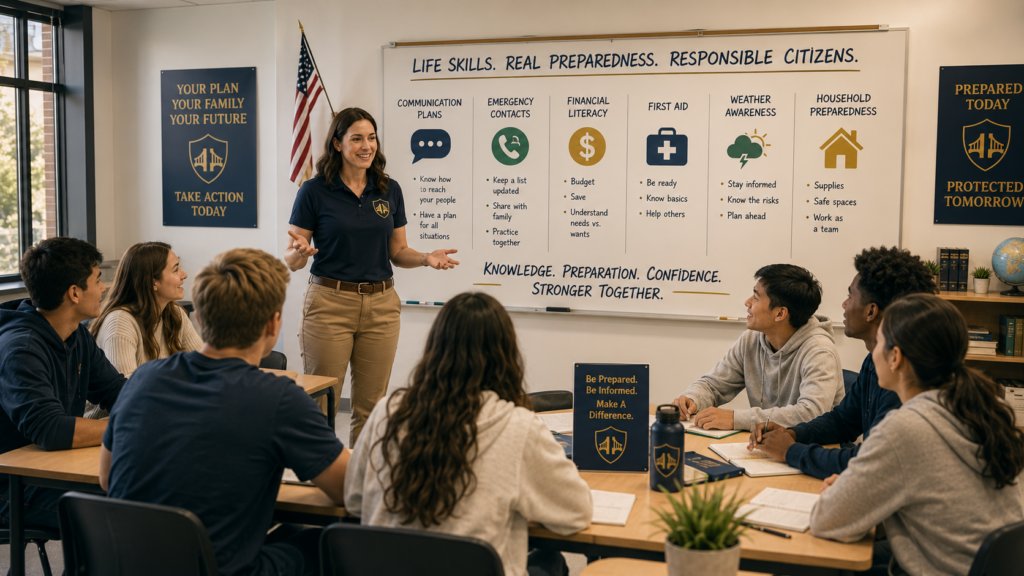
Children spend years studying mathematics, science, reading, and history in school. Yet for many, their first real lesson in emergency preparedness comes when they experience a wildfire, an extended power outage, a cyberattack, or a severe storm firsthand.
We can do better
Financial literacy provides an important lesson. Although more than half of U.S. states now require a stand-alone personal finance course for graduation, financial education remains uneven across the country. Many elementary and middle school students still receive little or no structured instruction, and a significant percentage of teachers report they do not feel adequately prepared to teach the subject. Progress is being made, but there is still work to do.
Preparedness should not follow the same fragmented path.
Instead, preparedness education should become a natural part of developing responsible citizens. Young people should graduate knowing how to communicate during an emergency, identify trustworthy sources of information, care for vulnerable family members, understand basic household preparedness, and make sound decisions under pressure.
These are not survival skills.
They are life skills.
Adults deserve the same opportunities to learn and practice them. Emergency preparedness is not a course you complete and then forget. Just like financial literacy, leadership, and effective communication, it requires continuous learning, regular practice, and periodic refreshers as our families, technology, and communities evolve.
Preparedness is not a one-time lesson.
It is a lifelong commitment to protecting the people who depend on us.
Replace Labels With Conversations
Words matter.
Too often, labels create unnecessary barriers.
The word “prepper” has many different connotations depending on who you are. To some people the word “prepper” evokes images of someone holed up in a basement with MREs and years of stockpiled canned goods while others may see a person that is preparing for natural disasters.
For some, it represents thoughtful planning.
To others it could represent the sensationalized TV shows and the lots of misinformation that can be found on social media regarding the subject of preparedness.
Instead of debating labels, let’s focus on outcomes.
A family with emergency contacts, stored medications that they take, a supply of drinking water, and a means of communicating with loved ones does not have to prepare for the end of the world.
They are planning for their life to handle something unexpected to happen on next Tuesday.
That perspective changes the conversation.
Preparedness stops being an identity.
It becomes common sense.
Leadership Creates Culture Before Crisis
People rarely rise to the occasion.
Instead of people rising to the occasion, they generally do what it is that they have been practicing, reinforced to do, and what they have been expecting to do.
Organizations behave the same way.
Communities behave the same way.
Families behave the same way.
Preparedness is not built during the emergency.
It is created and put into place months to years in advance by strong leaders and good communication, as well as the simple act of repetition to create habits and high expectations of the community.
Most of America’s greatest preparedness opportunities have very little to do with supplies and many things to do with the way that Americans think about preparedness.
Our greatest opportunity for being better prepared for potential emergencies and disasters is how we THINK about being prepared for potential emergencies and disasters.
Once we have a shared social language for preparedness then emergency planning will transition from a document centered exercise relying on government programs and involving the community to a leadership focused effort where we are able to be proactive instead of reactive.
Less reliance on government programs and more community responsibility.
It becomes less about reacting to an emergency and more about leading through an emergency.
In short, preparedness is something that responsible people do for each other.
Final Thoughts
The Prepper Potpourri video asked an important question.
What other countries get right in terms of emergency preparedness and management isn’t that they are more prepared for emergencies than the USA, but rather that they have made preparedness socially acceptable, publicly promoted, and culturally expected.
America already has outstanding emergency managers.
- We have world-class first responders.
- We have exceptional volunteers.
- We have millions of families who quietly prepare every day.
Linking all of the individual groups and individuals together with one message.
- Preparedness is not a political statement.
- Preparedness is not a personality trait.
- Preparedness is leadership.
When enough people in enough places start to talk this way, the preparedness that is today the domain of a few very interested people will become a natural part of the culture of our whole society.
It becomes part of who we are.
Additional Information: Be Aware
References
Prepper Potpourri (YouTube Inspiration)
What Other Countries Get Right About Preparedness (What We Don’t)
https://www.youtube.com/watch?v=ugXafW-a4Ag
United States
Ready.gov
FEMA National Household Survey
https://community.fema.gov/PreparednessCommunity/s/National-Reports
Sweden
Swedish Civil Contingencies Agency (MSB)
https://rib.msb.se/filer/pdf/30874.pdf
Finland
72 Hours Campaign
Germany
Federal Office of Civil Protection and Disaster Assistance
Switzerland
Federal Office for National Economic Supply
Japan
Tokyo Metropolitan Government Disaster Preparedness Guide
https://www.bousai.metro.tokyo.lg.jp
Preparedness Is Leadership
Till next time
Stay Informed & Stay Safe

Daniel Kilburn
Founder · Emergency Action Planning
📘 For more information go to:
https://whatstheplandan.com/book
P.S.
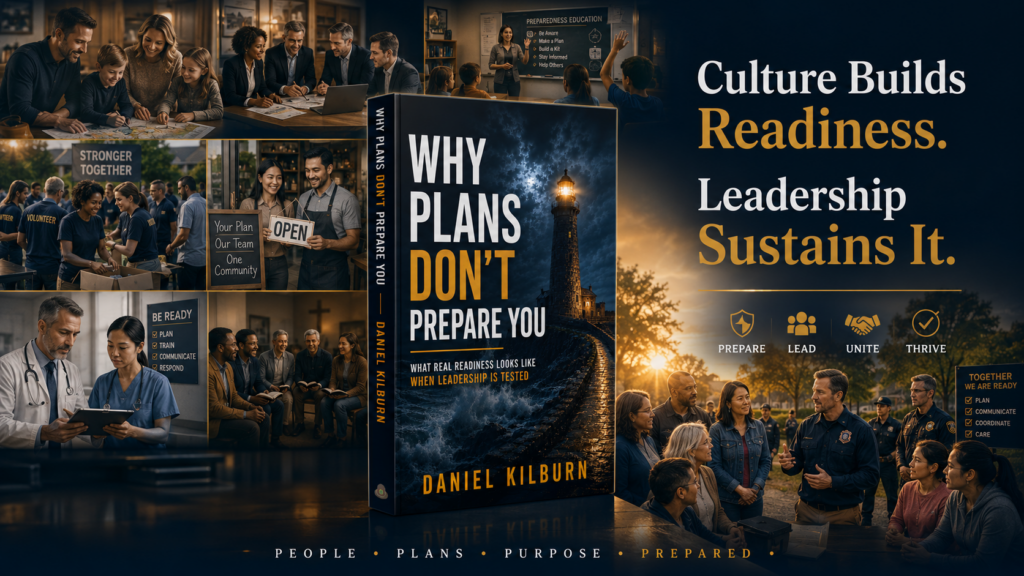
One of the central themes in my book, Why Plans Don’t Prepare You, is that readiness is never created by a binder sitting on a shelf. Real preparedness is built through leadership, communication, repetition, and culture long before a crisis begins.
That’s why I believe the next evolution of preparedness in America isn’t another checklist or another emergency plan. It is creating a shared social language for preparedness. One that encourages families, businesses, schools, nonprofits, and communities to see readiness as an everyday responsibility rather than an occasional activity.
Plans will always have value. However, people, not paperwork, determine how an organization, a family, or a community performs under pressure.
Culture shapes behavior, and behavior determines outcomes.
If we can change the culture, we will change the future.
This article was developed with the assistance of artificial intelligence and reviewed, edited, fact-checked, and approved by Daniel Kilburn. All opinions, conclusions, and recommendations reflect the author’s professional experience and judgment.