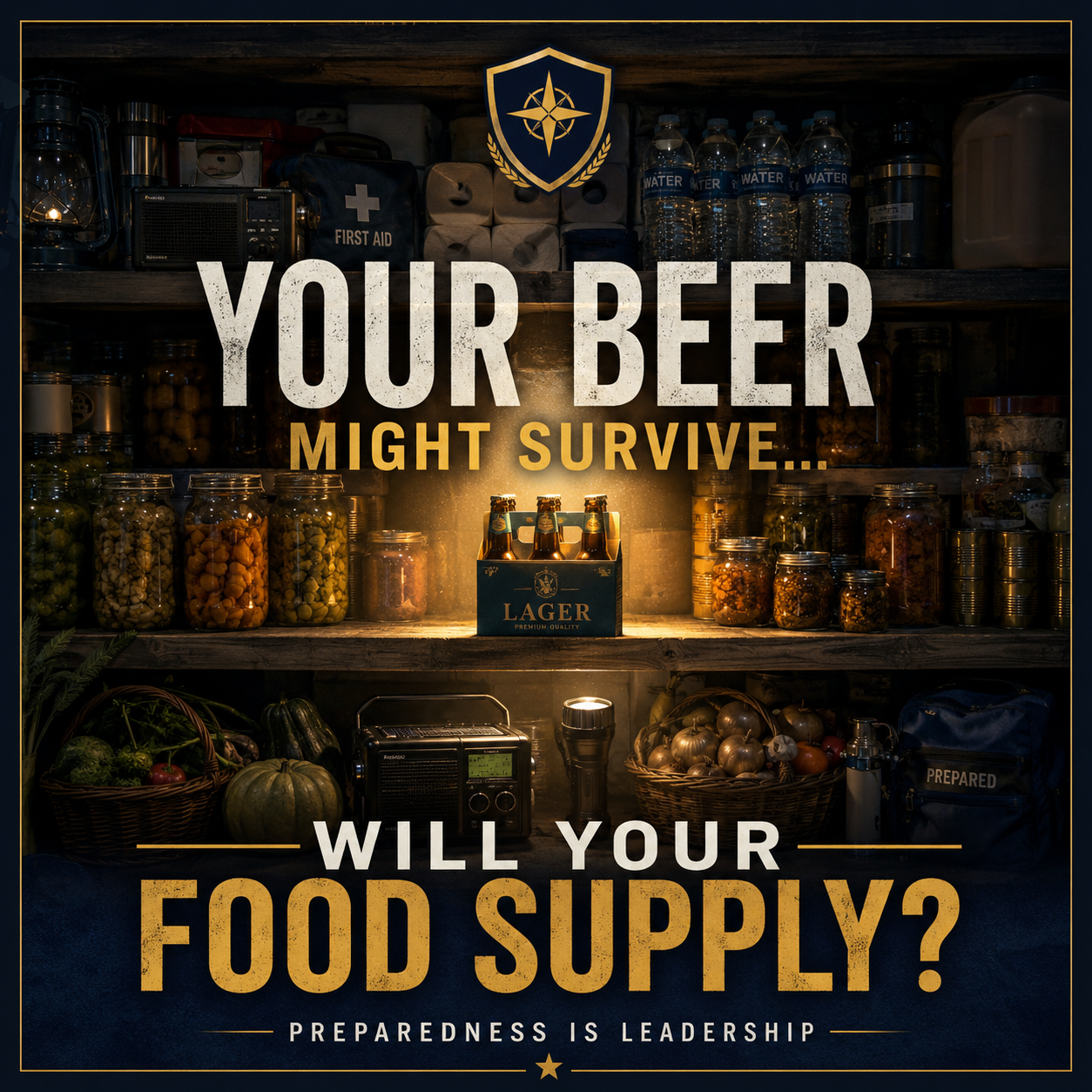
“Your Beer Might Survive… Will Your Food Supply?”
Beer Shelf Life at Room Temperature: A Disaster Planning Question Nobody Expected
An interesting question the other day:
“Daniel, how long will a can beer last at room temperature?”
To some people, this may seem to be an obvious question. Might be something that gets asked at back yard barbecues. And it is the kind of questions that I get on a regular basis from friends. And by friends, I mean my friends, the people I have in the past done experiments with to try and answer questions such as this. Over time we did several of these experiments , set the six-pack on the shelf, and see how long it’ll stay there. It didn’t last long. It was lots of fun and resulted in some interesting observations, but the biggest realization was that we had addressed a crucial aspect of disaster preparedness: how to store food and drinks for emergencies.
After talking with some local brewers and internet searches, the unopened canned beer will likely have a several months to even years of shelf life past the printed best by date. The beer will likely lose its great flavor and suffer a loss of carbonation but remain safe to consume for an extended period of time. But it might not be something you would want to consume in a disaster. Who knows?
Emergency Beer Storage (as Opposed to Emergency Food Storage)
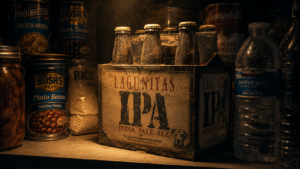
The beer problem in emergencies is not the supply of beer.
The real issue here is whether or not your family’s regular food supply will last through an emergency situation.
At the beginning of the preparedness journey, a typical stock pile consists of bottled water, canned goods, batteries, and lots of other supplies. Many families are then surprised when they are rummaging through the supplies of a preparedness expert like me and they see beer. They will then ask whether the beer can count towards the families’ water supply.
For the record, it does not.
But while each family member is trying their best to think clearly and stay on task, a family communication plan will fall apart quickly if you choose to use up the beer supply too quickly.
Regardless of the whether or not your beer supply survives, the real question for many families is: will your food supply make it?
Food Storage Is More Than Stockpiling
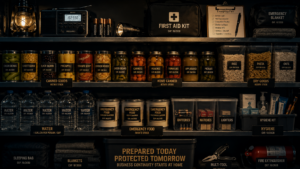
Many families approach preparedness like a shopping trip.
Buy a little extra.
Stack it in the garage.
Forget about it.
Months go by, and has it has gone bad. Expired, rotted, any bulging cans, stale crackers and packages of chocolate that have been forgotten.
Preparedness is leadership, not hoarding.
A well-organized pantry of shelf-stable foods that your family will actually eat for months to come is far more valuable than a large supply of expired and unknown items.
I recommend stocking your pantry with shelf-stable foods that you and your family already eat on a regular basis. By rotating those items through your kitchen as part of your normal meal routine, you keep everything fresh while making those foods a familiar part of the family diet. That way, when an emergency happens, you are far less likely to hear the dreaded survival phrase: “Ewwww… I’m not eating that.” Trust me, a disaster is a terrible time to discover your kids would rather starve than eat canned spinach from 2019. Preparedness works best when your emergency food doesn’t feel like punishment.
Alternative Food Sources for Urban Families
Natural disasters can prove that supply chains can be broken!
- Stores run low.
- Deliveries are delayed.
- Prices rise unexpectedly.
Resilient families research alternative food sources prior to an urban disaster.
Urban Gardening for Food Resilience
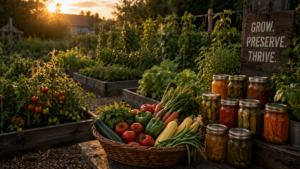
Even apartment dwellers can grow food.
Produce such as tomatoes, lettuce and strawberries can be grown in containers in a patio, balcony or even a small backyard. Home grown produce can be a fun addition to a preparedness plan for urban families.
The University of California Cooperative Extension Master Gardeners program is a good resource for home gardeners who are looking to improve the amount of food that they are able to grow and make their garden more sustainable.
Home grown produce even if only in small quantities, gives families skills, confidence and security for their future, which cannot be bought in a store.
Home Canning Extends Shelf Life
What to do with all that extra zucchini that your garden is producing.
You preserve it.
Home canning of fruits, vegetables, jams, and other foods allows families to save the foods that they have prepared for future consumption.
If your family wants to become more prepared for various emergencies, acquiring basic food preservation techniques will enable your household to be better prepared for unexpected events. Learn how to safely preserve foods through the University of California Master Food Preserver Program for the home gardener and cook.
Home preserved foods are always a better option than packaged emergency foods! There’s nothing better than opening a jar of home preserved peaches in an emergency.
Building Real Food Security
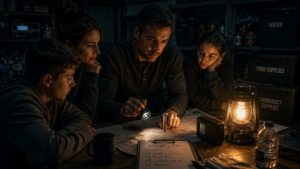
The goal of preparedness is to have systems and tools in place to keep you safe during a time of crisis. Eating old, uneaten prepared foods while stuck in a disaster situation with only stale crackers for long periods of time is NOT preparedness.
The ultimate goal of preparedness is to have the systems in place to keep your family safe, healthy, and self-sufficient in the event of a disaster.
That means:
- Maintaining emergency food and water supplies.
- Learning basic gardening skills.
- Understanding safe food preservation methods.
- Rotating stored food regularly.
- Reducing dependence on fragile supply chains.
What good is a stockpile of emergency supplies if the very food meant to sustain your family during a disaster ends up making them sick? Supplies matter, but so does knowing how to safely store, preserve, and prepare them.
Final Thoughts on Beer Shelf Life at Room Temperature.
So how long does beer last at room temperature?
Longer than most people expect.
A stockpile of emergency food and drinking water can keep your family going for a while, but supplies alone are not the whole story. Real preparedness means rotating your food using first-in, first-out (FIFO), learning how to safely preserve what you have, and ideally growing some of your own food to extend your resilience. And let’s be honest, if the power is out and the refrigerator is warming up, worrying about whether your beer has gone flat is probably the least of your problems.
Additional Information
For more information about the safe methods for preserving food, check out the University of California Master Food Preserver Program at: https://ucanr.edu/program/uc-master-food-preserver-program
For information on home gardening and how to grow your own food, the University of California Cooperative Extension Master Gardeners Program is a great resource: http://mg.ucanr.edu.
Till next time
Stay Informed & Stay Safe

Daniel Kilburn
Founder – Emergency Action Planning
P.S.
This lighthearted conversation about beer shelf life at room temperature points to a much bigger truth about preparedness.
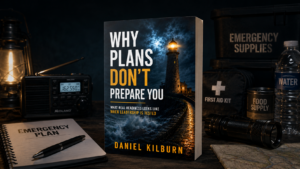
In my new book, Why Plans Don’t Prepare You: What Real Readiness Looks Like When Leadership Is Tested. I explain why real readiness is not found in what we store on a shelf, keep in a closet, or file away in a binder. Readiness lives in people. You can have all the canned goods, bottled water, preserved foods, and emergency supplies in the world. And still be unprepared if those supplies simply sit there gathering dust like a forgotten six-pack of beer.
Skills matter. Preparation matters. Leadership matters.
When disruption strikes and stress rises, weaknesses get exposed. People do not follow binders when everything goes sideways; they follow leaders. Be the leader your family want to follow.
Preparedness is not about fear; it is about confidence. It is about reducing uncertainty before disruption arrives.
Stocking food, water, and emergency supplies is important, but true readiness also requires the ability to adapt when plans fail. Learn to safely store what you have, explore alternative food sources, and test your plans before you need them.
If this article brought a smile to your face while making you think differently about preparedness, then it served its purpose. My book explores why traditional, supply-based preparedness often falls short and what it really takes to lead others through disruption.
Learn more and access the book at What’s The Plan Dan — Book Page.
Content Transparency Notice
This article was developed with the assistance of artificial intelligence and reviewed, edited, fact-checked, and approved by Daniel Kilburn. All opinions, conclusions, and recommendations reflect the author’s professional experience and judgment.