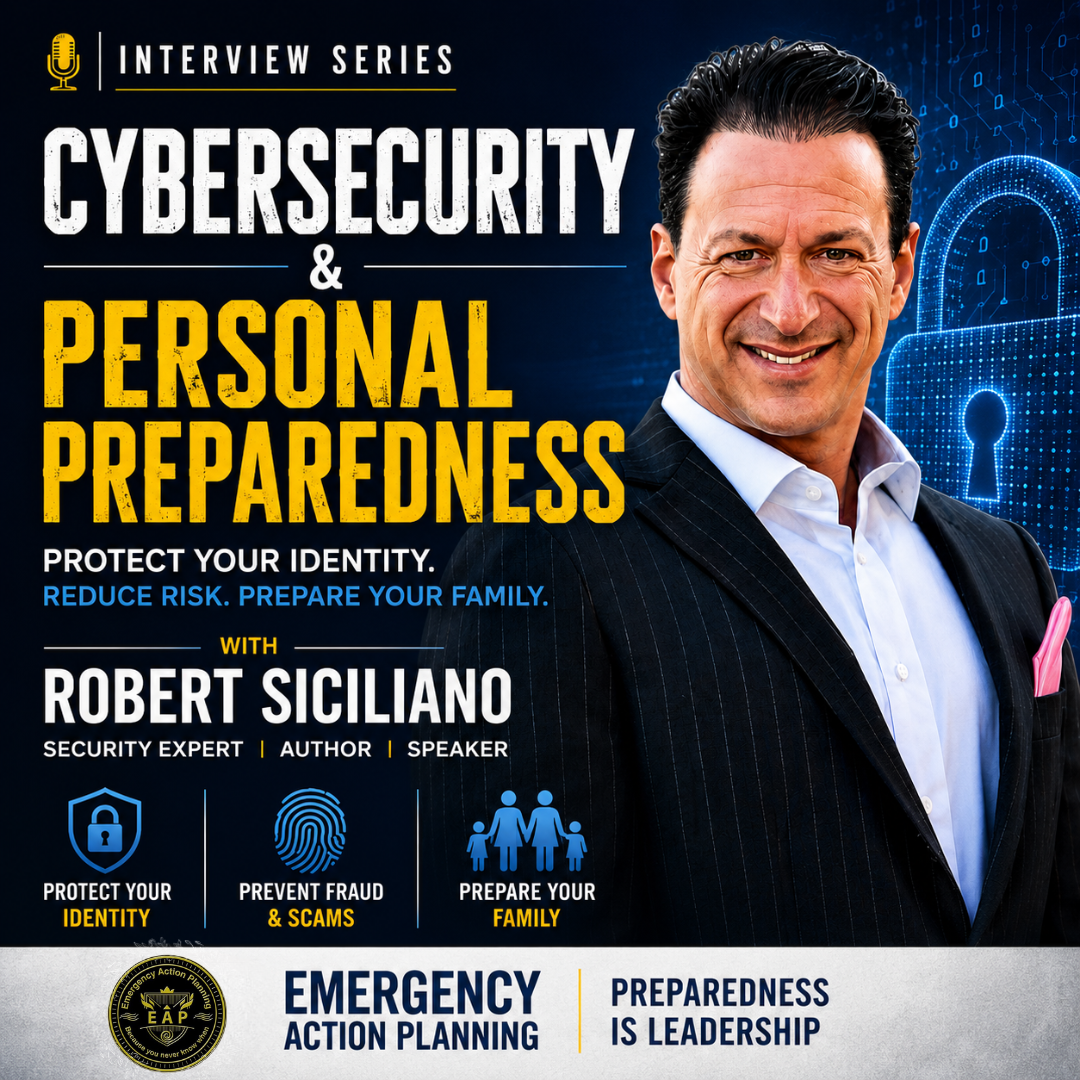
Cybersecurity and Personal Preparedness with Robert Siciliano
Why Cybersecurity and Personal Preparedness Matter More Than Ever
One of the recurring themes on the Act ASAP Podcast is that preparedness is leadership. That principle applies whether we are discussing natural disasters, business continuity, family readiness, or cybersecurity and personal preparedness.
In this upcoming episode, I sit down with Robert Siciliano, a nationally recognized security expert, author, speaker, and media commentator whose work focuses on personal security, identity theft prevention, fraud awareness, and cybercrime education.
Our conversation explores the growing risks facing families, businesses, and individuals in a world where physical threats and digital threats increasingly overlap. More importantly, Robert explains practical steps people can take today to become harder targets tomorrow.
Meet Robert Siciliano
Robert Siciliano has spent decades educating organizations and individuals on violence prevention, theft prevention, identity protection, cybersecurity, and risk reduction.
Unlike many security experts who come from law enforcement or intelligence backgrounds, Robert’s knowledge was shaped by personal experiences and years of observing how criminals exploit human behavior. Those experiences led him to dedicate his career to helping others recognize risks before they become victims.
Throughout our discussion, Robert emphasizes a simple but powerful message:
Preparation is not about fear. Preparation is about reducing risk.
Cybersecurity and Personal Preparedness Begin with Awareness
One of the most valuable lessons Robert shares is that many people underestimate their vulnerability.
Too often, individuals assume bad things happen to other people. Organizations believe they are too small to be targeted. Families convince themselves their neighborhood is safe enough.
However, criminals depend on those assumptions.
During our conversation, Robert explains that preparedness starts with awareness. Recognizing risks does not mean living in fear. Instead, it means understanding potential threats and taking reasonable actions to reduce exposure.
That mindset is the foundation of effective cybersecurity and personal preparedness.
Practical Steps to Improve Cybersecurity and Personal Preparedness
Robert outlines several straightforward actions anyone can take to improve their security posture.
Strengthen Your Physical Security
Preparedness begins at home.
Simple actions such as locking doors, installing security systems, maintaining emergency supplies, and learning basic self-defense can significantly reduce vulnerability.
These measures are not signs of fear. They are signs of responsibility.
Improve Your Digital Security
Cybersecurity and personal preparedness also require protecting your digital identity.
Robert recommends:
- Freezing your credit with the major credit bureaus
- Using a password manager
- Creating unique passwords for every account
- Enabling two-factor authentication
- Monitoring financial and personal information regularly
These actions create multiple layers of protection that make it far more difficult for criminals to succeed.
Prepare for AI-Driven Scams and Deepfakes
One of the most eye-opening parts of our discussion focuses on artificial intelligence.
AI-generated voice cloning, deepfake videos, and highly convincing scams are changing the threat landscape. Criminals can now impersonate family members, executives, and trusted individuals with alarming accuracy.
As a result, Robert stresses the importance of verification.
His recommendation is simple:
Analyze. Authenticate. Act.
Before responding to urgent requests, verify the source independently. A quick phone call or separate confirmation may prevent devastating financial losses.
The Leadership Lesson Behind Preparedness
Perhaps the most important takeaway from our conversation is that preparedness is a lifelong process.
Robert continually invests in learning, training, updating plans, improving security systems, and refining his family’s readiness.
That commitment reflects a truth I often share with audiences:
We rarely rise to the occasion. We fall to our level of preparation.
Whether we are discussing cybersecurity, emergency preparedness, family readiness, or business continuity, the principle remains the same.
The time to prepare is before the crisis arrives.
Listen to the Full Interview
If you want practical guidance on protecting yourself, your family, your finances, and your digital life, you will not want to miss this conversation.
Robert Siciliano delivers actionable insights that every leader, parent, business owner, and community member can apply immediately.
The full interview will be released on June 17 through Emergency Action Planning and the Act ASAP Podcast.
I encourage you to listen, share it with your family, and begin taking action today.
Because when disruption comes, preparation always beats reaction.
Quick Start Checklist
- Freeze your credit with the three major credit bureaus.
- Install a reputable password manager.
- Enable two-factor authentication on critical accounts.
- Review your home security basics.
- Build or refresh your emergency supplies.
- Schedule time each quarter to review and update your preparedness and security systems.
Start Here
One simple first step
If you are not sure where to begin, start by freezing your credit and enabling two-factor authentication on your email account. Those two actions alone can dramatically reduce your exposure to common fraud and account takeover attacks.
Connect with Robert Siciliano
Robert Siciliano is a cybersecurity expert, author, speaker, and security awareness advocate who helps individuals and organizations reduce risk, prevent fraud, and strengthen personal and digital security.
Website:
https://safr.me/
LinkedIn:
https://www.linkedin.com/in/robertsiciliano/
Preparedness Is Leadership
Till next time
Stay Informed & Stay Safe

Daniel Kilburn
Founder · Emergency Action Planning
P.S.
The threats Robert Siciliano discusses are often viewed as technology problems. In reality, they are leadership problems.
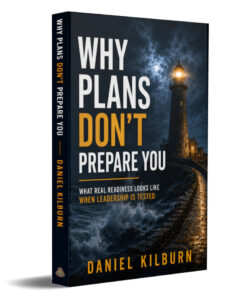
Identity theft, cybercrime, deepfake scams, and AI-enabled fraud are modern examples of a larger truth explored throughout Why Plans Don’t Prepare You. The danger rarely comes from the threat itself. The danger comes from believing that awareness alone equals readiness.
Many people know cybercrime exists. Many organizations know they could be targeted. Yet knowledge without preparation creates a false sense of security.
Just as emergency plans fail when they are never tested, security measures fail when they are never implemented. Real readiness requires action, practice, verification, and continuous improvement.
The criminals Robert describes are constantly adapting. Leaders must do the same.
Preparedness is not a document. It is a system.
Preparedness is not intention. It is action.
Preparedness is leadership.
📘 Order Why Plans Don’t Prepare You on Amazon:
This article was developed with the assistance of artificial intelligence and reviewed, edited, fact-checked, and approved by Daniel Kilburn. All opinions, conclusions, and recommendations reflect the author’s professional experience and judgment.