
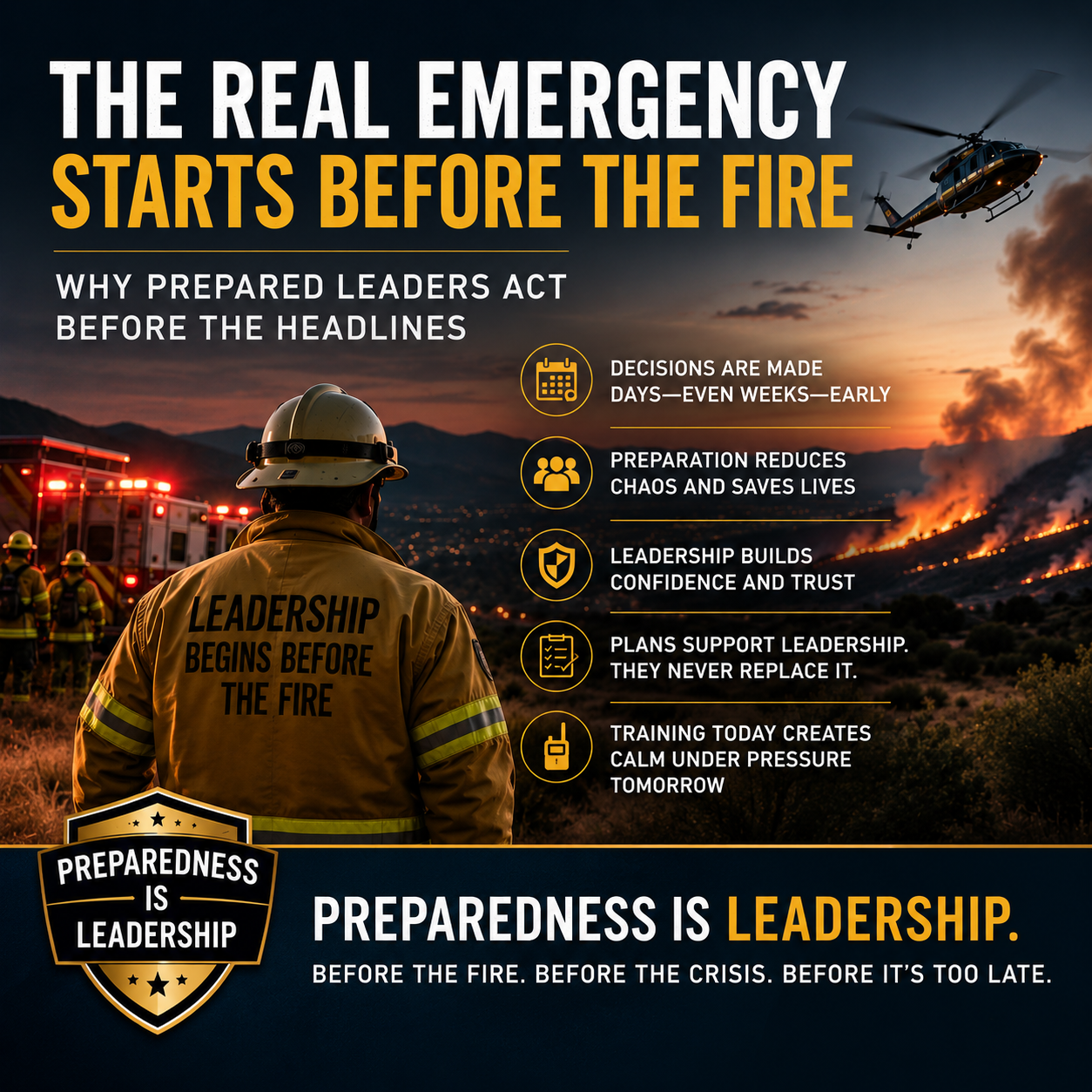
The Real Emergency Starts Before the Fire: Why Prepared Leaders Act Before the Headlines
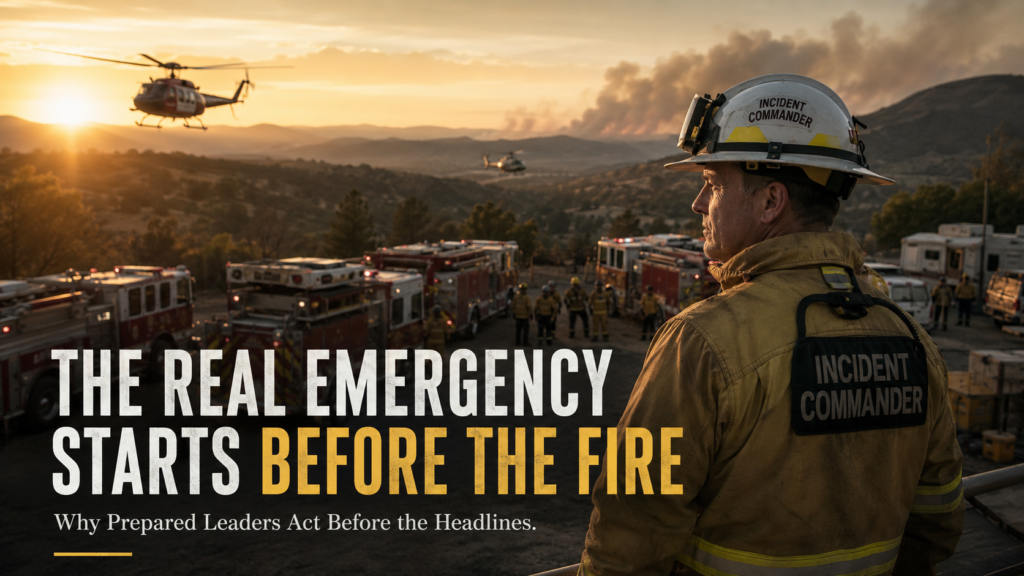
The real emergency starts before the fire. By the time smoke appears on the horizon, thousands of decisions have already been made. Firefighters have been pre-positioned. Aircraft have been staged. Weather conditions have been analyzed. Incident commanders have evaluated risks and allocated resources long before most people notice the first signs of danger.
That same principle applies to families, businesses, schools, nonprofits, and community organizations. The real emergency starts before the fire, because preparedness is not about reacting to an event. Instead, it is about making sound leadership decisions before circumstances force your hand.
When wildfires dominate the headlines, they provide more than dramatic images. They reveal a fundamental truth about leadership: professionals prepare before the emergency, not during it.
Why the Real Emergency Starts Before the Fire
Emergency responders understand something that many organizations overlook.
The first emergency is rarely the wildfire itself.
Rather, the first emergency is deciding whether to prepare before conditions become critical.
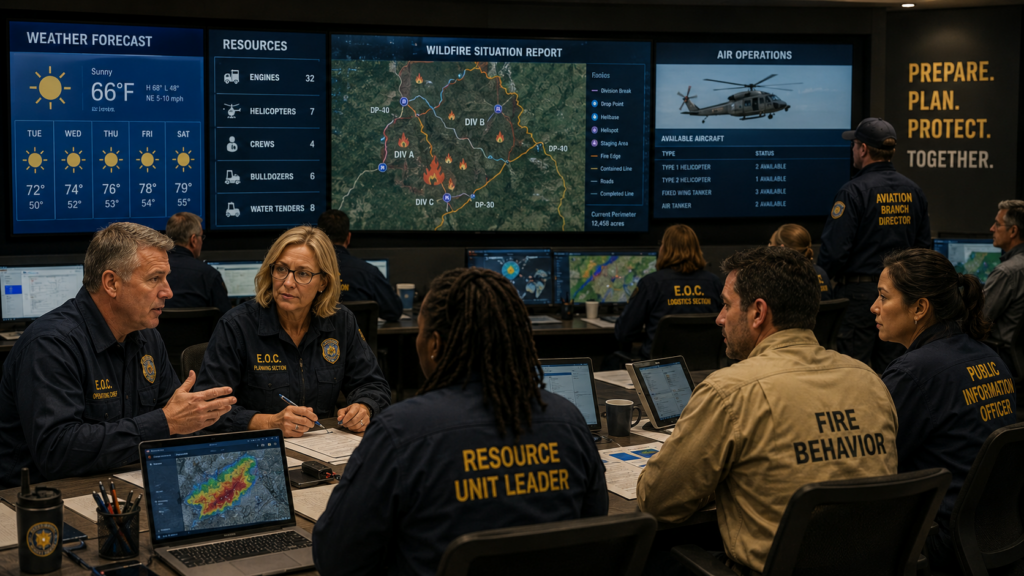
Throughout every wildfire season, emergency management agencies continuously monitor weather patterns, vegetation moisture, wind forecasts, and resource availability. As conditions worsen, firefighters, aircraft, and equipment are strategically positioned where they are most likely to be needed. Those decisions occur days—and sometimes weeks—before flames threaten homes and businesses.
Consequently, when the public finally sees breaking news coverage, emergency leaders have already been working around the clock.
The real emergency starts before the fire, because preparation always begins long before the crisis becomes visible.
Preparedness Is a Leadership Decision
Leadership is measured long before a crisis begins.

Whether you lead a household, a business, a nonprofit, or a school district, people expect someone to make informed decisions before uncertainty becomes panic.
Unfortunately, many leaders intentionally postpone preparedness because today’s responsibilities feel more urgent than tomorrows possibilities. Budgets demand attention. Meetings fill calendars. Customers need service. Families juggle countless commitments.
Nevertheless, emergencies refuse to wait for convenient timing.
Leadership means recognizing risk early enough to act while choices still exist.
Prepared leaders ask questions such as:
- What could interrupt our operations?
- How would we communicate?
- Who depends on us?
- What resources would we need during the first 72 hours?
- Have we practiced our response?
Those conversations are far easier before emotions, uncertainty, and confusion enter the picture.
Why Early Preparation Creates Better Outcomes
Preparedness is often viewed as an expense.
In reality, preparedness is an investment in leadership.
Organizations that prepare early frequently experience:
- Faster decision making
- More confident employees
- Reduced operational downtime
- Stronger customer confidence
- Better financial resilience
- Improved organizational culture
Likewise, families that discuss emergencies before they occur typically experience less anxiety because expectations have already been established.
Confidence grows from familiarity.
Panic grows from uncertainty.
Therefore, preparation should never be viewed as fear-driven. Instead, it demonstrates confidence in leadership.
Technology Supports Readiness Leadership Creates It
Today’s emergency managers have access to remarkable technology.
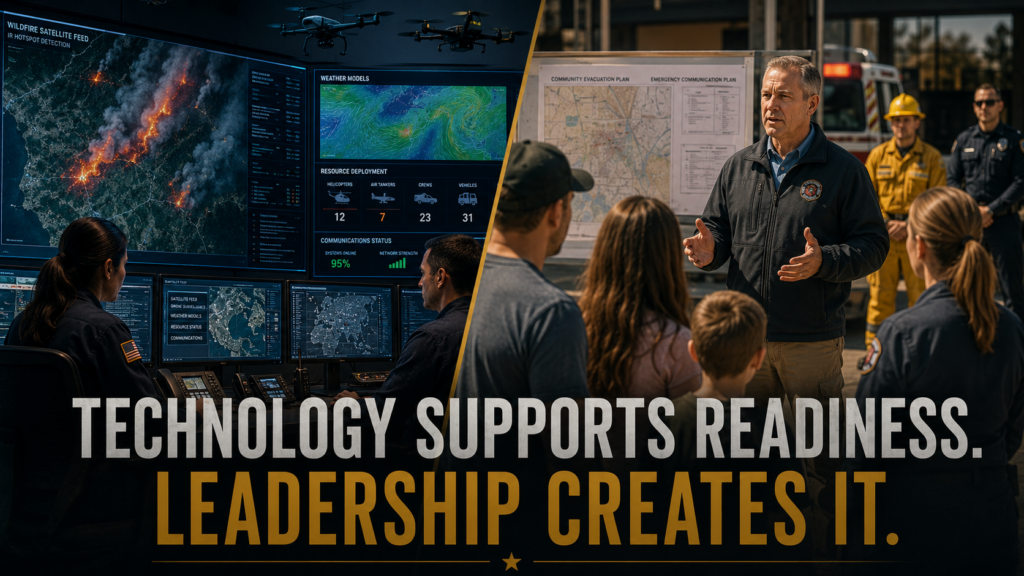
Satellite monitoring systems.
Artificial intelligence.
Weather modeling.
Real-time mapping.
Drone reconnaissance.
Each tool provides valuable information.
However, none of them actually makes decisions.
People do.
Technology can identify risk.
Leadership determines what happens next.
Many organizations mistakenly believe purchasing software, writing plans, or installing emergency notification systems automatically creates readiness.
Unfortunately, none of those investments matters if leaders have not built trust, communication, and accountability throughout the organization.
Plans support leadership.
They never replace it.
From Families to Businesses, the Principle Never Changes
The principles of preparedness remain remarkably consistent regardless of who you serve.
Families benefit from discussing emergency communications before disaster strikes.
Businesses benefit from identifying critical operations before disruptions occur.
Schools benefit from training staff before emergencies happen.
Nonprofits benefit from understanding how they will continue serving vulnerable populations during community crises.
Although every organization looks different, successful preparedness always begins with leadership.
When people know someone has already thought through potential challenges, confidence replaces confusion.
That confidence becomes one of the most valuable resources available during any emergency.
Training Creates Calm Under Pressure
Many of the greatest military leadership lessons are taught in peace but applied in war. I learned one such lesson during my time in the U.S. Army. I was a Senior Infantry Drill Sergeant in the Army Reserve, and we were conducting live-fire training for a group of Marine Corps military personnel on an M203 40mm grenade launcher range.
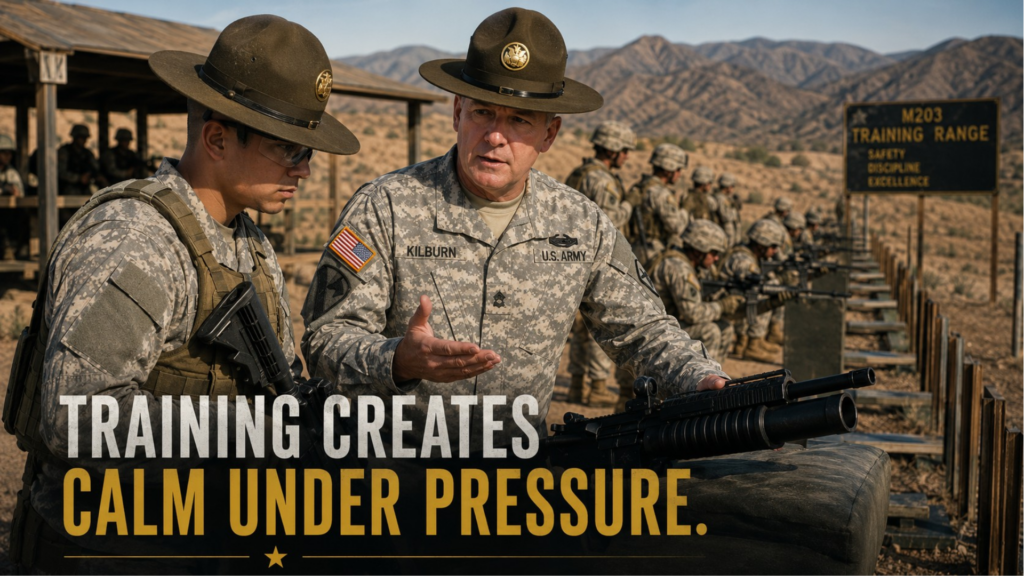
I was the NCOIC at the time and had to designate an NCOIC replacement as my unit was conducting a training operation and I was needed elsewhere. The junior Drill Sergeant I identified was to assume the role and responsibility of the NCOIC for the training operation on that range.
As the newly appointed NCOIC, the junior Drill Sergeant had all the training as a Staff Sergeant to perform his duties as an NCO on the M203 range; however, he lacked the experience of being the NCOIC on that particular range.
Instead of explaining all the scenarios that could play out as NCOIC of this range I focused on one thing I knew was going to happen: the first misfire on the range.
“Let me show you what to do when the first misfire happens.”
I didn’t say if it happened.
I said when.
Why?
This was an important point for me to get across to him, because after years of conducting live-fire training, the first misfire always happens.
Misfires on the M203 range occur more than 99% of the time due to the simple fact that the person launching the grenade did not give the breech of the launcher enough force to lock into place. Newer shooters of the M203 have been known to be afraid to give the breech enough force to lock into place, fearing that something will happen they do not want. This fear results in the firing pin never reaching the primer of the round and thus a misfire occurs.
The result is a misfire.
Lucky for us the Army has a procedure to handle these type of situation while conducting live fire on ranges.
In discussing with this junior Drill Sergeant the procedures for an M203 misfire, I would then have the Drill Sergeant restate the steps for me until I was confident that he would handle a misfire safely. The Drill Sergeant was an experienced shooter and was familiar with the specifics of the M203, therefore I wasn’t trying to teach him anything new. What he lacked was sufficient confidence to manage through the scenario of a misfire on a live-fire range.
Then we went our separate ways.
Later that day I found out that on that range, the misfire had occurred, and the Drill Sergeant had handled it correctly and saved the day. There was no confusion, no panic, and no hesitation. The range remained safe, the training continued, and afterward the Marine commander lauded the Drill Sergeant for his exemplary leadership in managing the incident.
A Marine experienced a misfire.
My Drill Sergeant immediately implemented the proper procedures.
- There was no confusion.
- There was no panic.
- There was no hesitation.
I wasn’t surprised.
His success wasn’t luck.
It wasn’t because someone handed him a checklist during the emergency.
What we did on that day to prepare for the most likely problem was what saved the day.
That was a long time ago. I am no longer on that Army firing range. But the lessons learned on that day are lessons for life. Whether you’re protecting a family, leading a business, serving on a nonprofit board, or directing a school, people don’t have time to learn during a crisis. They will rely on what you’ve practiced before.
A checklist or set of steps is rarely used in a crisis. What one draws on in a time of need is what one has previously practiced. Whether one is a parent and protecting their family, a for profit businessperson, a non-profit board of directors or the principal of a school, the people reporting to them will rely on the leader to have dealt with a similar situation in the past and to lead them through the situation.
What people practice before a crisis is what they will do during the crisis.
Preparation doesn’t eliminate uncertainty.
It reduces hesitation.
Reducing hesitation when you are leading the group and people are looking to you to handle the situation is a big deal.
The Headlines Are Not the Beginning
Every major emergency follows a familiar pattern.
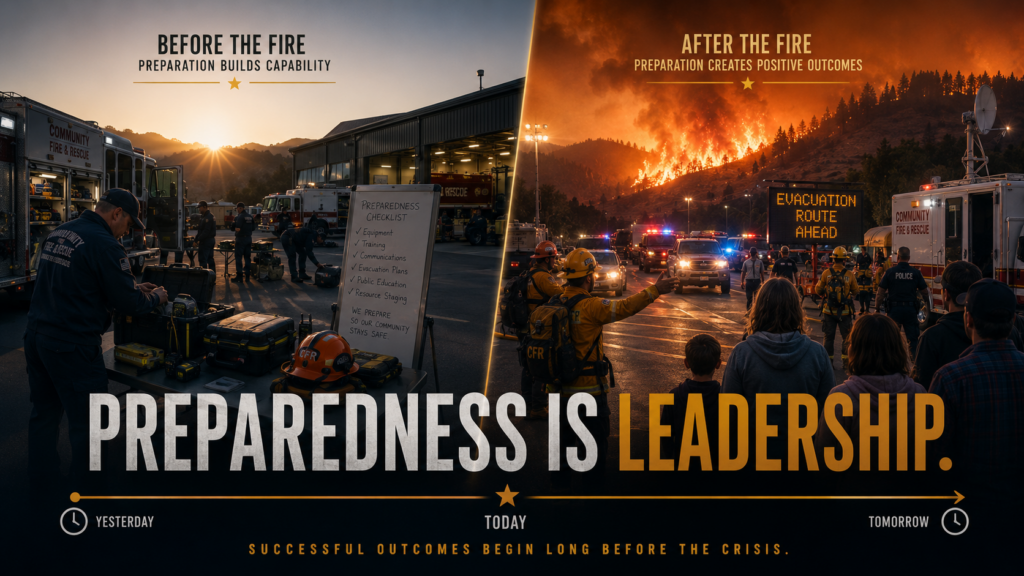
The public sees breaking news.
Emergency managers see months of preparation.
Business leaders often see operational disruption.
Prepared leaders see the value of decisions they made long before anyone else recognized the threat.
Whether the next challenge is a wildfire, hurricane, cyberattack, severe weather event, pandemic, supply chain interruption, or financial crisis, the lesson remains unchanged.
The real emergency starts before the fire.
Your preparation begins the moment you decide to lead before circumstances force you to react.
Because when pressure arrives, people rarely follow the plan.
They follow the leader.
Continue Learning: Wildfires Are A Year-Round Concern
https://www.emergencyactionplanning.com/wildfires/
Till next time
Stay Informed and Stay Safe

Daniel Kilburn
Founder
P.S. If this article resonated with you, you’ll find these leadership principles explored in much greater depth in my book, Why Plans Don’t Prepare You: What Real Readiness Looks Like When Leadership Is Tested.
The book isn’t about creating bigger binders or longer emergency plans. It’s about building a culture where families, businesses, schools, and organizations develop the confidence, communication, and leadership skills needed to perform when it matters most.
Because when pressure comes, people rarely rise to the occasion, they respond according to the level of preparation and leadership they’ve already developed.
Learn more or order your copy at whatstheplandan.com/book.

This article was developed with the assistance of artificial intelligence and reviewed, edited, fact-checked, and approved by Daniel Kilburn. All opinions, conclusions, and recommendations reflect the author’s professional experience and judgment.
References
National Interagency Fire Center – National Preparedness Levels
https://www.nifc.gov
CAL FIRE – Current Incidents and Preparedness Information
https://www.fire.ca.gov
FEMA – Mitigation Saves Fact Sheet
https://www.fema.gov/sites/default/files/2020-07/fema_mitsaves-factsheet_2018.pdf
National Weather Service – Fire Weather Resources
https://www.weather.gov/fire
Ready.gov