When Preparedness Becomes Personal: Ordinary People Can Do Extraordinary Things
CPR preparedness is a very practical area for a family to become prepared in, yet it is one of the most underrepresented preparedness areas that we encounter in the work that we do until there is an actual emergency.
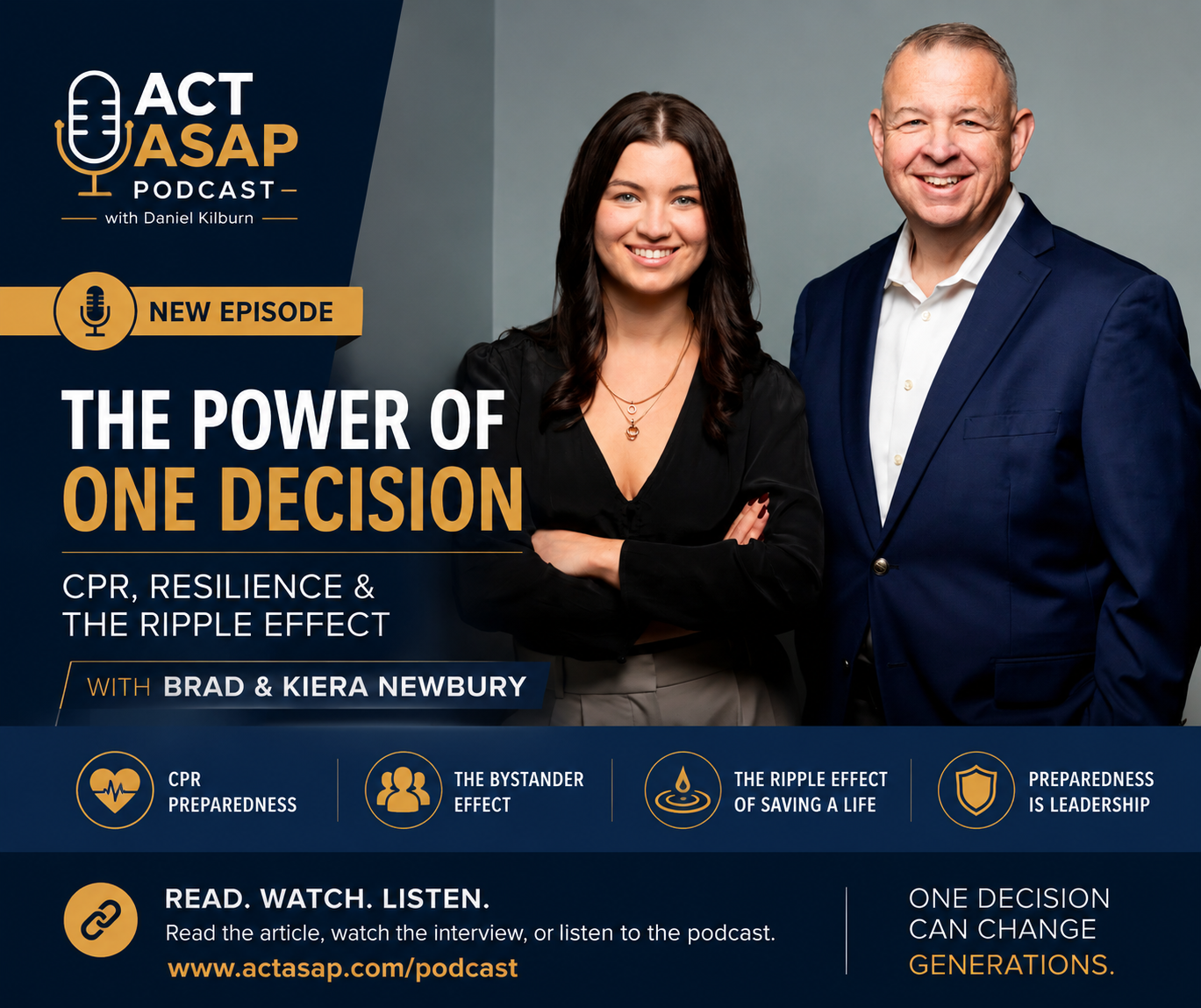
I recently had the privilege of speaking with Brad and Kiera Newbury, a father-daughter team dedicated to emergency medical education and preparedness. We discussed CPR preparedness, how as a family they are trained to save a life and how a difference can be made in an emergency to help save a life. We also talked about the upcoming book by Brad and Kiera, The Saved Effect: How Ordinary People Create Extraordinary Outcomes.
Brad and Kiera shared with me that the person who saves a life is usually NOT an EMS or Firefighter. They usually are ordinary citizens who happened to be prepared before the event occurred.
About The Saved Effect
Brad and Kiera Newbury are the co-authors of The Saved Effect: How Ordinary People Create Extraordinary Outcomes, an upcoming book that explores the extraordinary ripple effects created when ordinary people step forward to save a life.
The stories shared throughout the book demonstrate how a single act of preparedness can impact families, communities, and generations to come.
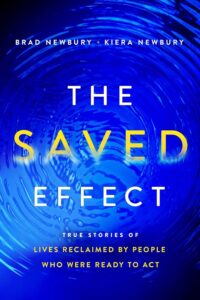
📘 The Saved Effect by Brad and Kiera Newbury
Available on Amazon:
Watch my full conversation with Brad and Kiera Newbury above, or continue reading below for key takeaways and lessons learned.
CPR Preparedness Creates Lifesaving Ripple Effects
Fire Captain/Paramedic Brad Newbury and EMT Kiera Newbury of National Medical Education & Training Center discussing the extraordinary ripple effects of survival, emergency preparedness, and the hidden human stories n their upcoming book, The Saved Effect (to be published this year).
He explained that after 40+ years of serving in the fire service/EMS that he has found that a single intervention can save the lives of multiple people. This is the basis for the book he and his daughter Kiera created, The Saved Effect. The book will explore in greater detail how the act of saving a life can have long lasting effects on the family and community of the saved person. For example, a person who has a cardiac arrest can survive for decades after the event and during that time leave behind a legacy of memories and a trail of people affected by their life. They can be a grandfather, for example, and survive for years and years after the event. And in that time leave behind a plethora of memories with their family, as well as affecting the lives of everyone he they ever come into contact with.
Every life saved will go on to affect many people’s lives for years to come after the incident that saved their life.
Why Family CPR Preparedness Matters
A great deal of cardiac arrests occur in a home setting and the first person to respond to the event is usually a family member. Thus, CPR preparedness for family members is of the utmost importance for the prepared family.
Waiting for professional responders may not be enough. You are your own first responder until help arrives.
Brad and Kiera identified three major factors that can save the lives of people experiencing cardiac arrest.
Situational Awareness During Emergencies
First is Situational Awareness for Emergencies.
Most cardiac arrests have warning signs that are often overlooked by individuals who are unaware of what to look for. Situational Awareness is the ability to recognize a life-threatening situation and take action to provide lifesaving treatment in a timely manner.
Willingness to Act During a Crisis
Knowledge alone is not enough.
There is a second reason why people fail to act in a public emergency and that is because of the way that people behave in public situations. As previously stated, just because an emergency occurs in public does not mean that there will be people around to respond.
Kiera then went on to explain the ‘bystander effect’ and how this applies to many public emergencies. The ‘bystander effect’ is the phenomenon where the more people there are around during an emergency the less people actually help. The reason for this is that everyone expects someone else to help in an emergency.
Being prepared to deal with an emergency is about deciding before an emergency that you will be ‘the one’ to respond to that emergency.
CPR Training Builds Confidence
The final ingredient for CPR preparedness is education and practice.
As with most skills, confidence is generally not a naturally-occurring phenomenon that happens to us by accident. Rather, it is the result of some combination of learning, repetition and experience.
- Athletes practice.
- Military personnel practice.
- Emergency responders practice.
- Families should do the same.
The more you know about CPR and the situations in which you would use it, the more confident you will be to use it in a life-or-death situation.
Leadership Before The Emergency
The key lesson about CPR preparedness that seems to have resonated most with me after our discussion was the topic of leadership.
Leadership is not simply holding a title.
A Leader is someone who makes a decision prior to a situation forces one to make that decision.
Preparedness is leadership. It takes a responsible leader to prepare before a disruption.
Families learn CPR for the same reason first responders do: because they care about people a lot and hope to be able to give them the very best care should there be an unexpected medical crisis.
The Real Lesson Behind The Saved Effect
What impressed me most about Brad and Kiera, although they are first responders, was their belief that anyone can make a difference in a lifesaving emergency.
- Anyone can make a difference.
- You do not need specialized equipment.
- You do not need decades of experience.
- You do not need a uniform.
Awareness of potential emergencies, training to deal with them, and then acting in the situation where an emergency occurs can save a life.
The stories in The Saved Effect underscore the value of preparedness for the wide array of events that life can bring rather than being consumed with fear of possible disasters.
Every life saved creates a future that would have otherwise been lost.
That is a lesson worth remembering.
Additional Resources
National Medical Education & Training Center:
Till next time
Stay Informed & Stay Safe
Daniel Kilburn
Founder · Emergency Action Planning
P.S.
The core message of my new book ‘Why Plans Don’t Prepare You’ is that plan development to create readiness does not consist of producing lots of documents. Readiness is established by people who is ready to act in a crisis.
Cardiac arrest is a perfect example.
Most families plan of action for a heart attack, is calling 9-1-1. But few families rehearse what to do in the minutes before an ambulance arrives. A medical emergency plan typically is only sufficient to call 9-1-1 in time. The medical emergency plan, checklist, or YouTube video cannot perform CPR for you. The written materials cannot make decisions on your behalf in a medical emergency. Developing a preparedness mindset and practicing your plan is required to have the confidence to act in a crisis.
Only prepared people can do that. This powerful message will stay with me forever. I am confident that this will enable you to take your leadership roles to the next level, preparing others to deal with whatever disruption comes your way, a medical emergency such as a cardiac arrest, a natural disaster, a cyberattack or human-made disasters.
Preparedness is never about collecting information.
Preparedness is about developing capability.
That is why plans alone do not prepare you. People do.
📘 Order Why Plans Don’t Prepare You on Amazon:

Preparedness Is leadership
This article was developed with the assistance of artificial intelligence and reviewed, edited, and approved by Daniel Kilburn. AI was used to support research, organization, and drafting. Final opinions, recommendations, and conclusions reflect the author’s experience, expertise, and professional judgment.